Gazprom LNG carrier escorted by guided-missile frigate off Norway
Russia now pairs military escorts with energy exports as contested sea lanes and European enforcement threaten the Arctic shipping route.
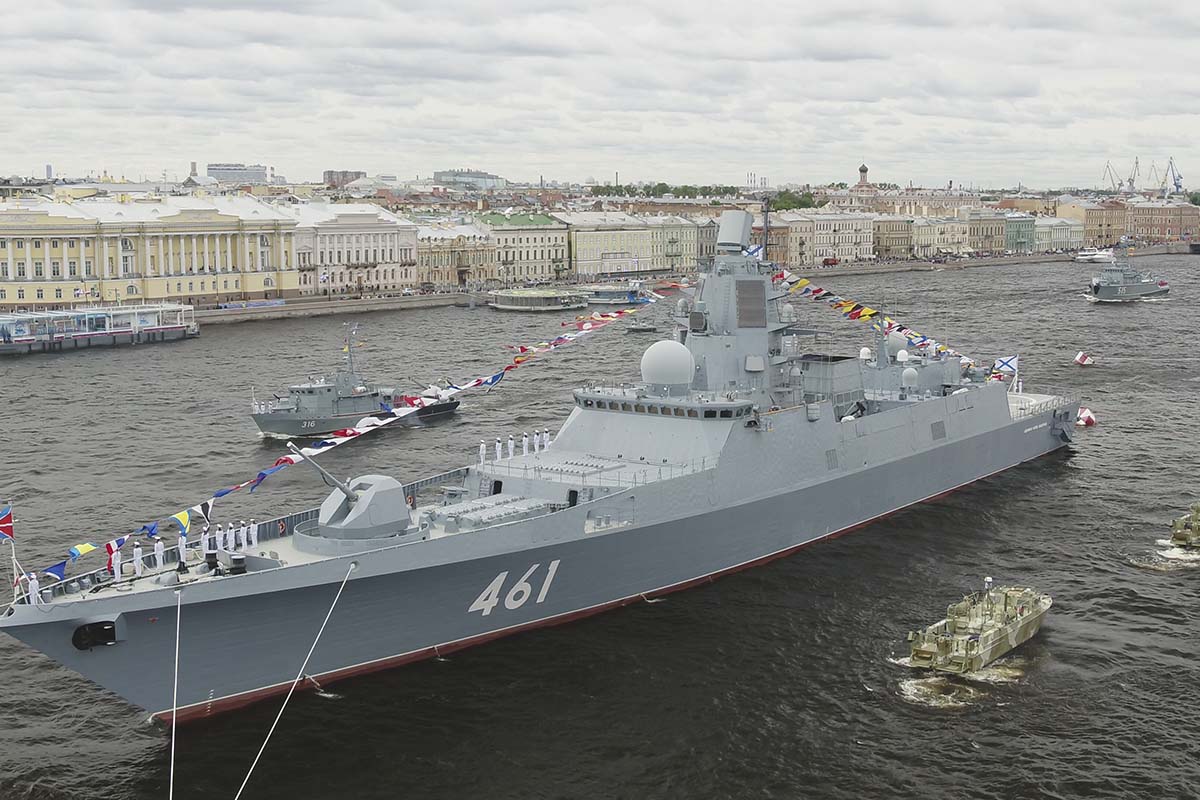
Two ships sailed north along the Norwegian coast on August 20: Portovyy, an LNG carrier owned by Gazprom LNG Portovaya, loaded at the company's small plant near Vyborg, and behind it Admiral Kasatonov, one of the newest frigates of Russia's Northern Fleet, which is home ported at Severomorsk on the Kola Peninsula.
A gas tanker selling fuel into the world market does not normally need a guided-missile warship alongside it. This one does.
Russia's energy exports now depend on sea lanes that have been turned into contested water, and Moscow is answering with uniformed escorts on commercial hulls. The pairing off Norway shows what that looks like in practice, and why the whole Arctic trade is heading the same way.
The Barents Observer reported on August 20 that Admiral Kasatonov is one of several Northern Fleet vessels assigned to escort merchant traffic, following mounting European pressure on the shadow fleet and fear of drone attacks. European navies are boarding, detaining, and inspecting Russia's shadow-fleet tankers across the Baltic, and Ukrainian drones have reached ships and ports far from the front line.
The destroyer Admiral Levchenko was stationed in the Baltic from December 2025 with what the Northern Fleet described as a mission to escort civilian vessels working in Russia's interests. The Baltic is becoming too dangerous for Russian shipping, so Russia is moving its trade north.
Atomflot, the state nuclear-shipping company, reports cargo on the Northern Sea Route along Siberia's coast ran 15 percent higher in the first half of 2026 than a year earlier, and it expects total volumes above 40 million tonnes for the first time, according to High North News on August 18. The route is absorbing the traffic that sanctions pushed out of the Baltic, and the volume numbers show it is not symbolic.
As sea ice sits at its late-August minimum, The Barents Observer noted on August 20 that dozens of ships were already on the eastern stretch of the route in mid-August, including oil tankers with no ice reinforcement at all.
Cargoes from Arctic LNG 2, majority-owned by Novatek, have been delivered repeatedly to China's Beihai terminal despite Western sanctions. Reuters, via Arctic Today, reported on September 30, 2025, that ship-tracking firms Kpler and LSEG counted a seventh such discharge there, while other loads sail the long way round toward the Bay of Bengal.
The project cannot sell into Europe or pay Western insurers, so every molecule must travel under flags, intermediaries, and now naval protection that exist precisely to defeat the sanctions net.
Gazprom and Novatek need Asian revenue and hulls that Western P&I clubs will not touch, so they accept state protection as the price of moving cargo. The Northern Fleet gets peacetime justification, sea time, and a permanent presence pattern along NATO member Norway's coast, all dressed as maritime security.
China wants cheap gas and a corridor to Europe that no American navy can close, which is why Chinese operator Sea Legend plans a weekly-style liner service with eight scheduled departures linking Ningbo to Felixstowe, Rotterdam, Hamburg, and Gdansk. Militarnyi reported on August 12 that the container ship Istanbul Bridge departed that day on the route's first scheduled container crossing, and South Korea's PanStar sent its own trial vessel in mid-August, as reported by High North News on August 18. Everyone is acting rationally, which makes the arrangement durable.
The Soviet model
In the 1930s the Soviet Union built Glavsevmorput, a single state directorate that turned the entire Arctic passage into a government operation, with icebreakers, ports, and air support answering to Moscow rather than to freight rates. The route served the plan, not the market, and when the state's priorities shifted, the ships followed.
What is different this time is the demand side. Stalin's Arctic moved timber and prisoners' nickel; today's route plugs directly into the world's largest LNG and container markets, with paying customers in Shanghai and Busan who want it to work.
The Suez Canal spent decades as a chokepoint run for profit by an international company precisely because everyone's cargo flowed through it and weaponizing it would have cost every owner on the water. If the Northern Sea Route is genuinely becoming a transit corridor between Asia and northern Europe, commercial gravity could pull it back toward open, insured, rules-based operation, since a route that frightens western European ports will not keep their calls. Sea Legend scheduling Felixstowe landings is either the start of that normalization or camouflage over a military corridor; the next two seasons will say which.
Who pays when a tanker sinks
Russian hydrocarbons reach Asia without Western insurance, so the risk sits with whoever owns the hull, often a barely traceable special-purpose vehicle like Lule One Services, the registered owner of one sanctioned Arctic LNG 2 tanker listed in the Equasis database, according to Reuters via Arctic Today on September 30, 2025. Warships escorting merchants through neutral Norwegian waters normalize a military presence that Oslo and NATO must either contest or absorb.
And if a shadow tanker goes down in the Barents with no proper cover, the cleanup bill lands on coastal states that never saw a kopeck of the profit: the deepest cost yet, paid by people who never touched the cargo.
Western P&I clubs and classification societies refusing Arctic LNG 2 tonnage is what makes the frigate necessary, so any return of mainstream coverage to these voyages would signal the pressure easing. Watch the insurers and the ice class lists. Watch also Norway's coast guard response pattern along the northern tip, since repeated silent acceptance would confirm that the escort model is now tolerated fact.
If the read is right, expect more warship-and-tanker pairings through September as the season peaks, more Arctic LNG 2 arrivals at Beihai, and Sea Legend's first Felixstowe call met with protest rather than welcome. If it breaks, look for a detained escort incident, a Chinese pullback after tariff friction, or an early freeze that strands unescorted tonnage in the ice.
Either way, Russia no longer trusts the sea to carry its own exports, and a country that guards its cargo with warships has told you who the customer really is.