Boeing's production push stalls on traveled work it inherited in Wichita
The factory was bought back to fix the fuselage, and the workers who build it say the flaw it bought is still on the line.

The fuselages still leave Wichita by rail, and the men and women who build them say a chunk of the work rides along unfinished. At what was once Spirit AeroSystems and is now Boeing (BA) property, line workers told Leeham News and Analysis on August 24 that traveled work on the 737 fuselage line remains widespread, often disrupting workflow.
Boeing closed its $4.7 billion buyback of Spirit on December 8, 2025, ending two decades of outsourcing the 737’s body, according to Breaking Defense on december 8, 2025. The buyback’s purpose was quality: owning and fixing the plant as a path to higher production. The rate has gone up. By the workers’ account, the factory is not fully fixed.
That gap is financial. Boeing Commercial Airplanes moved from an FAA cap of 38 aircraft a month to 47, passed the regulator’s top-level review in late May, and opened a fourth Everett 737 line on July 6 aiming for 52 a month next year (CNBC, Jul 6, 2026; Leeham News, Aug 24). Each uptick multiplies what leaves Wichita unfinished. A flaw caught in Wichita costs hours; at Renton, or after delivery, it costs weeks and headlines.
Boeing’s own supply-chain chief says the needle has moved. Ihssane Mounir, senior vice president of supply chain and fabrication, told reporters in July that fuselages arriving by rail at Renton now need about 30 to 40 percent less rework than before the acquisition, and said Wichita workers "know what they're doing" and "just need the tools and the support", according to Leeham News on august 24. Asked whether the line was trouble-free, Mounir replied, "Absolutely not," in the same Leeham News and Analysis report of August 24.
Independent counts point in the other direction but agree on the scale.
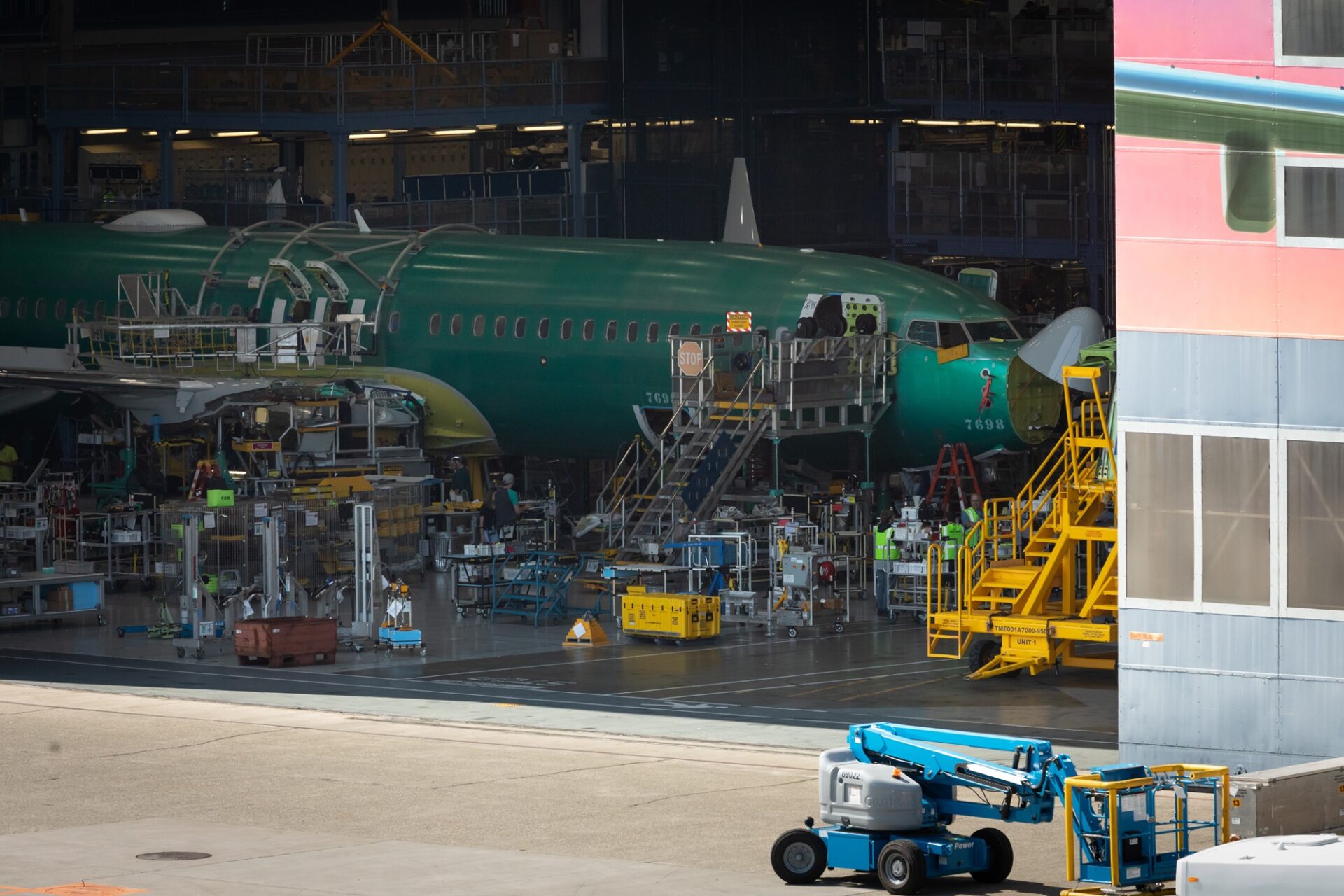
BNP Paribas Equity Research found 38 fuselages shipped from Wichita to Renton through March, slightly below the 42-per-month Boeing was cleared to build at that time, according to BNP Paribas Equity Research on april 1, 2026.
Boeing is betting capital on improvement. The company plans to invest about $1.3 billion in Wichita operations, according to Aviation Week Network reporting on May 13, according to Aviation Week Network on May 13, 2026. Some workers see real change: safer work culture and better communication from management, according to Leeham News on august 24. Others see fuselages rolling down the line with jobs trailing: an issue that hobbled the 787 as far back as 2008.
The scoreboard for this risk is Boeing's monthly delivery count and the FAA’s rate approvals, and both are looking better. That is the trap. Traveled work is measured by no scheduled statistic; it appears in worker accounts, in rework hours, and in defects like the door-plug blowout that grounded the 737 fleet in January 2024, according to Leeham News on august 24. The standard metric tracks the middle of the operation and misses the tail, and that tail is carried by airlines waiting for jets and whoever holds the warranty.
This arrangement dates to 2005, when Boeing spun off Wichita to an investment firm and created Spirit, introducing a handoff between companies where one factory used to do the work. The MAX crashes of 2018 and 2019, and the 2024 door-plug blowout, exposed what that handoff cost. Boeing responded by unwinding the 2005 deal, reintegrating Spirit while pressure to raise output was already on.
The counteranalogue is that this time Boeing bought the factory outright, finishing the $4.7 billion agreement in December 2025, according to Breaking Defense on december 8, 2025, and Mounir’s rework figures show quality gains within a year, faster than the 787 ever managed. The difference is whether quality can overtake the rising production rate.
The speed of this pressure varies by seat. Boeing’s finance team measures by quarters, since cash flows when jets deliver; for a Wichita mechanic the clock is the next shift, when a skipped step is found or missed; for the FAA the timeline is program reviews. Wichita only changes as fast as workers are trained and tools are provided, which is measured in months.
If traveled work holds, the cost lands on Boeing in extra labor at Renton and in missed delivery targets, making the turnaround depend on Wichita throughput, although the 737 lines are in Washington. Airlines wait longer or get planes with more factory corrections. Wichita suppliers gain from the $1.3 billion Boeing has planned for the site, according to Aviation Week Network on May 13, 2026, and debt holders benefit most from a rate Boeing can sustain. The exposure lands on Boeing's cash flow: 47 jets a month promised at the July rate, according to CNBC on july 6, 2026, with the upstream fuselage line running out of public view.
The judgment rests here. The system now measured in aircraft per month leaves out the unfinished work that travels the line, pushing costs and risks out of the factory and into the field.