Iran builds only where the cameras cannot follow
A site no inspector has ever entered is the only nuclear location in Iran still being built, and that fact is the whole story.
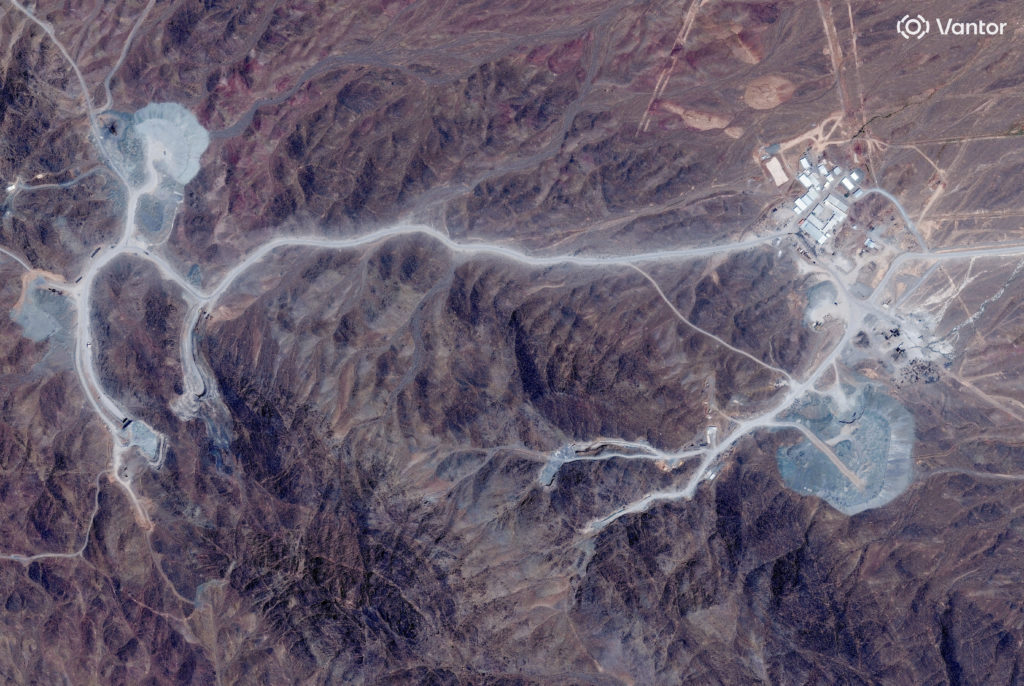
In late June, satellite photos showed crews pouring concrete and steel into the tunnel mouths of Pickaxe Mountain, a granite-buried complex a mile south of Natanz. Washington and Tehran had signed a memorandum on June 17 requiring Iran to hold every nuclear-related site exactly as it was for as long as negotiations ran on. The crews kept working anyway.
One of those facts ends this autumn, and the digging says which one. The stakes are a facility no outsider has seen: inspectors have never been let through its gates, so Pickaxe Mountain appears on no schedule anyone keeps, as The Defense News reported on July 5. A site too deep to bomb cheaply and too closed to verify is an insurance policy against both diplomacy and war paying out.
The Institute for Science and International Security analyzed imagery from the satellite firm Vantor and found vehicles and construction workers hardening the entrances. Some portals were partially backfilled to choke off vehicle access, and one smaller internal tunnel complex sealed completely. The Defense News published the findings on July 5.
Its analysts, including senior fellow Spencer Faragasso, judge the underground space large enough to house a new enrichment hall, though nobody outside Iran can confirm what is inside, the July 5 report notes.
Türkiye Today reported in August 2026 that IAEA chief Rafael Grossi has said the agency has never been granted access, and that Iran announced its intention to conduct nuclear activity there without treating it as a secret.
Donald Trump wants a visible win. MarketScreener reported on July 21 that he threatened in late July to hit Pickaxe Mountain "pretty soon," and by early August, the New York Post wrote on August 8, his advisers were floating the destruction of the tunnel entrances as the cheapest way to set the program back.
Supreme Leader Mojtaba Khamenei approved the June memorandum partly because Pezeshkian's government convinced him the economic blockade was strangling the country. But the security men around him, led by figures such as IRGC-aligned commander Vahidi, never wanted the paper and now read its collapse as vindication, ISW reported on August 21. Israel sits outside the agreement entirely and has called it a sham from the start. Each actor needs the other to blink first, and Pickaxe Mountain is where Iran decided to wait.
The slow pressure
The trigger this month is the death of the memorandum itself. Iranian officials believe Washington sabotaged the deal in bad faith, the pro-concession camp around Pezeshkian has been weakened, and hardliners like parliamentarian Mahmoud Nabavian now call any talk of peace "surrender," according to ISW's August 21 report. The slow pressure is older than the war that began in February. Iran learned from June 2025 that known sites get struck, so the entire program is migrating into rock.
The same satellite review found no serious reconstruction at bombed Natanz, Fordow or Isfahan, while Iran has reopened fifty of sixty-nine entrances across eighteen damaged underground missile bases since the spring ceasefire, The Defense News reported on July 5. Repair what is already photographed. Build only where cameras cannot follow.
In 2007, Israel destroyed Syria's Al-Kibar reactor after American and Israeli intelligence spotted plutonium-relevant construction that Damascus had never declared, ending the program in a single raid but nearly triggering a wider war. Strike Pickaxe Mountain and you may bury equipment, personnel and possibly radiological material under a million tons of mountain, buying months at best and handing Tehran the victim narrative it lacks. Leave it and you accept an unmonitored site whose purpose everyone can guess.
Under the 2015 nuclear deal, by contrast, Iran kept its known facilities under daily inspection for years and shipped out most of its enriched stock, proving Tehran will trade transparency for sanctions relief when the economics bite. The difference now is bargaining power. That stockpile, roughly 440 kilograms of uranium enriched to 60 percent, is believed by the IAEA to sit largely at Isfahan, whose tunnel entrances remain sealed with earth rather than open to inspectors, according to The Defense News's July 5 report. A country negotiating from under a blockade does not usually spend concrete on a hole in a mountain unless it expects the hole to matter.
Who profits meanwhile
If this goes wrong, the talks die first, and with them the only channel keeping American and Israeli bombers in their hangars.
Then the Gulf states finish the job the memorandum abandoned. Al Jazeera reported on August 19 that the United Arab Emirates imposed an indefinite trade embargo on Iran after ballistic missiles it attributes to Tehran struck its territory, closing the smuggling routes through which Iran had been resupplying.
China bought more than eighty percent of Iran's exported oil before the war and refuses to enforce anyone else's embargo, but it cannot conjure cargoes that never sail. Reuters reported on August 21 that Iranian oil offered for September and October delivery has fallen sharply as the floating inventory runs down (ISW, August 21).
Satellite operators profit meanwhile. Firms like Vantor and Airbus Defence and Space have become the de facto inspection agency for a program the IAEA can no longer see, and governments are paying them accordingly (The Defense News, July 5; BreezyScroll, May 8). Oil traders holding cargoes already outside the Gulf collect scarcity rents as supply thins. And the hardliners inside Tehran profit most of all, because every sanction and every strike confirms the story they tell the supreme leader: the Americans will never honor a deal, so dig deeper.
Pezeshkian told the country on August 20 that rising oil prices prove the regime is winning the war, according to ISW's August 21 report. He is counting barrels his own ports increasingly cannot load.
New imagery showing centrifuge-scale construction, ventilation stacks or power lines at Pickaxe Mountain, or an IAEA request for access formally refused, would confirm the read.
What breaks it: Iran granting inspectors entry to the complex, or imagery showing the work stopping, which would suggest the site is a bluff priced to be caught. Watch the photographs, not the press conferences.