Hormuz shipping remains stalled as ceasefire fails to revive traffic
Vessel counts through the strait continue to fall despite a US-Iran truce, with damaged infrastructure and attacks leaving few ships willing or able to transit.

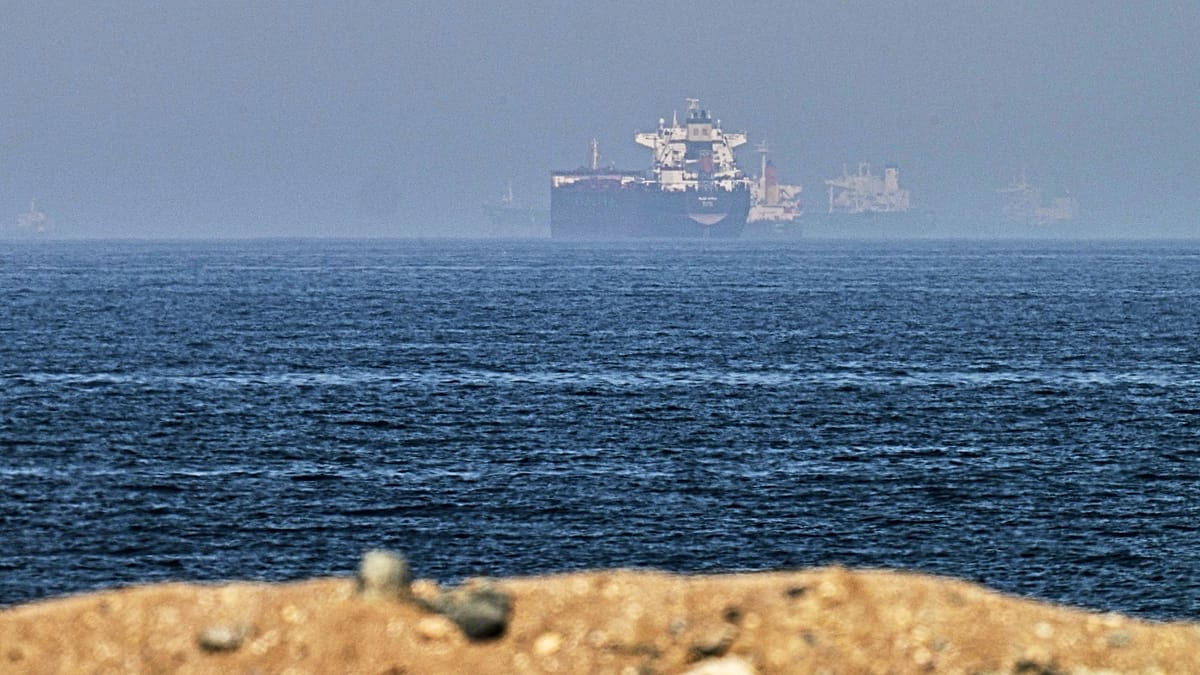
Only seven commercial vessels passed through the Strait of Hormuz on August 20: four inbound, three outbound, and not a single supertanker or LNG carrier among them. A ceasefire between Washington and Tehran is nominally in force. Kpler transit data carried by Regionalert on August 21 showed it.
What is at stake is whether peace can actually pull ships back. The week before, Lloyd's List Intelligence counted just 73 transits across all vessel types between August 10 and 16 in its August 19 brief, down from 91 the previous week, an 18 percent drop at the very moment the ceasefire was supposed to be drawing ships back. If peace were the binding constraint, traffic would be climbing. It is falling.
Iran wants unrestricted passage tied to the lifting of the American blockade on its ports, and it keeps attacking hulls to prove the strait cannot reopen on American terms alone. QuiverQuant's August 20 Hormuz update noted that the UAE blamed Iranian drones for strikes on two of its state-owned tankers last week, and that another outbound vessel was hit by an unidentified projectile days later.
Washington wants the strait open without conceding the blockade. President Trump insisted on August 19, as US News reported, that the waterway is open while talks stall.
Sitting between them are the people who actually own the cargo: Saudi Aramco, ADNOC, QatarEnergy, and the Japanese, Korean, Chinese and European refiners waiting at the far end. None of them will put a hull under a bridge that neither side controls.
Even if every shipowner in Piraeus and Dubai decided tomorrow morning that the strait is safe, much of what should flow through it cannot be loaded. Bahrain's Bapco Energies declared force majeure after an Iranian drone attack damaged its 405,000 barrel-per-day Sitra refinery in March, and France's Technip Energies told investors on April 30 that Sitra suffered permanent damage, as MEES reported on May 1.
The damage runs wider than one refinery. JPMorgan's (JPM) damage survey counts eight Gulf energy facilities heavily hit, including Qatar's Ras Laffan complex, where restoring even the damaged portion may take years (JPMorgan survey via TankTerminals, undated but post-strike). You do not send a very large crude carrier into a war-risk zone to wait for a berth that feeds a broken refinery.
Aramco lifts test cargoes
The trigger for this week's story is the partial restart. Saudi Aramco began lifting crude again at its Hormuz-side terminals last week after a three-week pause, with tankers queued to load spot heavy crude cargoes, Newsmax reported on August 18 citing shipping data and trade sources. Three very large crude carriers, the Malaysia Prosperity, Algeria Prosperity and Singapore Prosperity, each lifted around two million barrels at Juaymah and Ras Tanura between August 12 and 16, the Commodity Board's August 17 crude market note recorded.
That is the ceiling of the recovery so far: a handful of named ships moving test volumes while the wider fleet stays out. The terminal can only fill ships as fast as fields, refineries and storage upstream let it.
Underneath the ceasefire lies the slower pressure: physical capital destroyed in six months of war does not come back on a signing ceremony. Saudi Aramco had already shown how fast the easy part goes, restarting Ras Tanura loadings on June 26 after nearly four months halted, and Rystad Energy estimated Saudi exports returned roughly two million barrels per day to the market within three weeks, according to FocusPakistan on June 26.
But Aramco exported more than five million barrels per day before the conflict began, Hydrocarbon Processing reported in July, and the gap between two million and five million is exactly the difference between a functioning export machine and one running through damaged infrastructure.
OPEC+ added to the awkwardness by raising quotas again, a 188,000 barrel-per-day increase for August, its fifth consecutive monthly hike, which analysts called symbolic while transit remains thin, as the Eastern Herald wrote on July 6. Paper barrels do not need the strait. Real ones do.
Shipping follows insurability
The Tanker War of 1984 to 1988 offers one clean model. Iranian and Iraqi attacks on shipping in the Gulf cut transits sharply even though the waterway never formally closed, because Lloyd's of London repriced war risk faster than any navy could escort convoys. Traffic recovered in waves only after reflagging and escorts, not after lulls in firing. Shipping follows insurability, and insurability follows verified safety on both ends of the voyage, not ceasefires signed in distant rooms.
After the September 2019 Abqaiq and Khurais drone strikes knocked out roughly half of Saudi crude output overnight, Aramco restored full production within weeks by drawing on spare capacity and intact infrastructure, and oil prices gave back the spike within a month. That episode argues the Gulf can absorb shocks fast. The difference now is that Abqaiq was one complex among many, while this war damaged eight facilities across four countries, including the only major export refinery in Bahrain and the LNG spine of Qatar (JPMorgan (JPM) damage survey via TankTerminals). Fast recovery works when the machine is dented. This machine is missing parts.
Asian refiners who lost Gulf sour crude keep paying up for Atlantic Basin barrels, stretching VLCC demand onto longer routes and keeping freight rates firm even with less Gulf cargo.
Gulf producers earning less export revenue must fund repairs and social spending simultaneously, which pressures fiscal breakevens in Bahrain especially, whose refinery income is gone indefinitely.
Whoever finances the rebuild wins the contracts, and Technip Energies' seat inside the damage assessment tells you which engineering firms are positioned for a multi-year repair cycle (MEES, May 1). The winners here are shipowners with modern, insurable tonnage and Western engineering groups; the payers are Gulf treasuries, Asian refiners, and ultimately motorists.
Watch the berths, not the battleships. If the read is right, the sequence ahead looks like this: Aramco lifts a growing share of cargoes at Juaymah and Ras Tanura first, then ADNOC follows at Fujairah-side facilities outside the strait, then Sitra's repair timeline gets published, and only then do daily transits climb back toward anything resembling normal.
If instead transit counts rebound within weeks while Sitra and Ras Laffan remain dark, the bottleneck story is wrong and pure fear pricing was doing the work all along. The falsifier is visible in public data either way, which is rare and useful.