The Hormuz ceasefire has two versions, and ships are priced off the stricter one
Washington counts escorted barrels while insurers count drones, and only one of those ledgers moves a tanker.
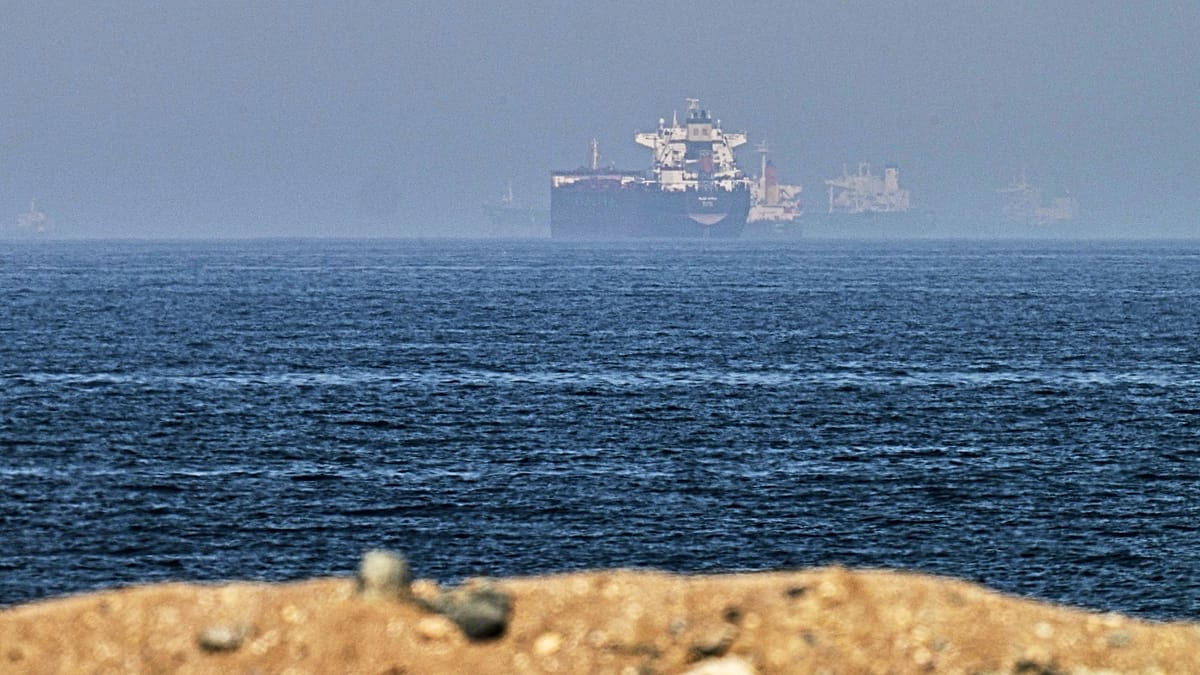
There are two ceasefires on the Strait of Hormuz this week, and they describe different worlds. In one, United States Central Command has helped more than 1,300 vessels carry some 660 million barrels of oil through the strait since early May.
In the other, preliminary counts show just 73 transits between August 10 and 16, down from 91 the week before.
Both numbers are real, and only one of them is what an owner reads before deciding whether his ship sails at night through twenty-one miles of water with Iran on one shore and a blockade running on the other. The gap opened because the ceasefire that exists is a memorandum, not a settlement.

Gulf News reported on August 21 that Central Command's escort effort had moved those 1,300 vessels and 660 million barrels. Lloyd's List Intelligence counted the market's version in figures published on August 19: just 73 transits between August 10 and 16, down from 91 the week before.
The week's damage came from drone strikes on two Abu Dhabi National Oil Company tankers on August 13 and a projectile that killed a seafarer on an outbound bulker five days later, according to Quiver EventTracker on August 20.
The interim arrangement signed on June 17 gave both sides sixty days to negotiate something permanent, and that clock ran out on August 17 with no agreement in hand, as United Against Nuclear Iran noted on August 19.
Washington reinstated its blockade of Iranian ports, and President Donald Trump said on August 18 that no talks were planned. Tehran kept linking unrestricted passage to its broader demands, and the UAE has blamed it for the tanker attacks Tehran calls piracy, according to Quiver EventTracker on August 20.
What survived is a tolerated corridor: an escort operation coordinated from Fort Bragg that moves roughly fifteen to twenty tankers through each night, as Axios reported via The Times of Australia in August 2026.
Central Command needs the corridor to keep Asian refineries fed without starting a wider war, so it escorts hulls that file the right paperwork and boards or disables those serving Iranian trade, sixty-four merchant vessels redirected so far by Lloyd's List Intelligence's August 19 count. Iran wants bargaining chips it can trade later, so it harasses enough traffic to keep the price of its cooperation high while avoiding a direct strike on an American warship.
The Gulf exporters, above all ADNOC, want their cargoes moving without depending on owners who refuse the risk, so they are buying their own ships. Adnoc Logistics and Services recently disclosed six very large crude carriers and five gas carriers worth a combined $1.3 billion, all according to Lloyd's List Intelligence's August 19 reporting. The insurers sit outside this diplomacy, tracking only attack frequency, and their answer is a number no negotiator signed.
The stricter ceasefire
War-risk underwriters quote per transit as a percentage of hull value, and even the most recent quotes for vessels still attempting the strait run several multiples of peacetime rates, rising again after this month's attacks, as Markets NXT reported on July 13 and Lloyd's List Intelligence confirmed on August 19. At those levels a single passage costs hundreds of thousands of dollars before fuel or crew, so ordinary commercial traffic thins out regardless of what any escort fleet guarantees.
State-backed and high-value cargoes move through the corridor; everyone else waits; the owners willing to take the risk can name their price. Spot earnings on the Middle East Gulf to China crude route now exceed $520,000 per day, again by Lloyd's List Intelligence's August 19 figures.
The trigger this month was the expiry of the June memorandum and the attacks that followed it. Underneath sits older pressure: a strait that carries roughly a fifth of the world's oil and liquefied natural gas, with bypass pipelines in Saudi Arabia and the UAE that cover only part of the flow, sitting next to a state whose main source of bargaining power is the ability to threaten that chokepoint, according to Quiver EventTracker on August 20.
Every negotiation pause since February has produced the same sequence. Truce, partial reopening, incident, repricing, and each cycle leaves a few more owners permanently unwilling to return. That attrition outweighs any single attack in making the current freeze harder to reverse than the last one.
During the Tanker War of 1984 to 1988, Iranian attacks on Gulf shipping pushed insurance rates up sharply until the United States reflagged Kuwaiti tankers and put the Navy behind them, after which volumes recovered and premiums collapsed well before the war itself ended. Escorts could outrun diplomacy then.
This time the escort already exists, roughly 660 million barrels moved under it since May, yet overall transits keep falling and Brent still trades near $92 a barrel, close to a three-week high, as reported by Gulf News on August 21 and Al Jazeera on August 20. In the Red Sea from late 2023, naval protection never restored normal commercial traffic either, because insurance and crew risk priced the escorts in rather than out. Hormuz looks more like the second case than the first, and the difference may be that the attacker here can reach ships from the shore it sits on rather than from the air.
Asian refiners pay record freight and margins while European buyers bid for West African and Atlantic crude that no longer has to pass Iran.
At least four very large gas carriers with histories of carrying Iranian cargo have loaded compliant cargoes in Qatar and the UAE, thirty such vessels since the conflict began, importing sanctions exposure into trades that used to be clean, according to Lloyd's List Intelligence on August 19.
DP World is spending about $100 million every month holding Jebel Ali ready while its container throughput runs near a tenth of normal, rerouting cargo through Fujairah and a land bridge to Jeddah, by Lloyd's List Intelligence's August 19 accounting. That bill backs the lenient ceasefire; the premium bills back the stricter one, and so far the premiums have been right.
Who pays
Asian refiners pay through the freight line, Gulf exporters through discounted or delayed liftings, and the crews of attacked ships pay worst. Quiver EventTracker recorded on August 20 that one of those crews lost a seafarer this week, with no group claiming responsibility.
The profits go to the small core of owners and national shipping arms still transiting, plus whoever holds tonnage when the next buyer gets desperate, and ADNOC keeps buying ships at above-market prices. The longer the two ceasefires diverge, the more the physical trade reorganizes around the corridor instead of returning through it.
Another weekly transit count below eighty, with the escort operation unchanged, would confirm that the lenient version never spreads beyond government paper, again per Lloyd's List Intelligence's August 19 figures. What breaks it is a signed agreement that lifts the blockade and the threats together, followed by war-risk quotes collapsing within days, as they did in 1988 once the shooting stopped. Insurance repricing faster than traffic recovers would show that the market believes the stricter ceasefire is ending.
A ceasefire that only one side's ships can afford is a toll road with a flag on it, and the flags change.