Panama Canal auction bids now shape shipping costs more than tolls
With official rates held flat, the canal’s open auction for scarce transit slots now determines real prices for ships in passage, reflecting peak demand and urgency.
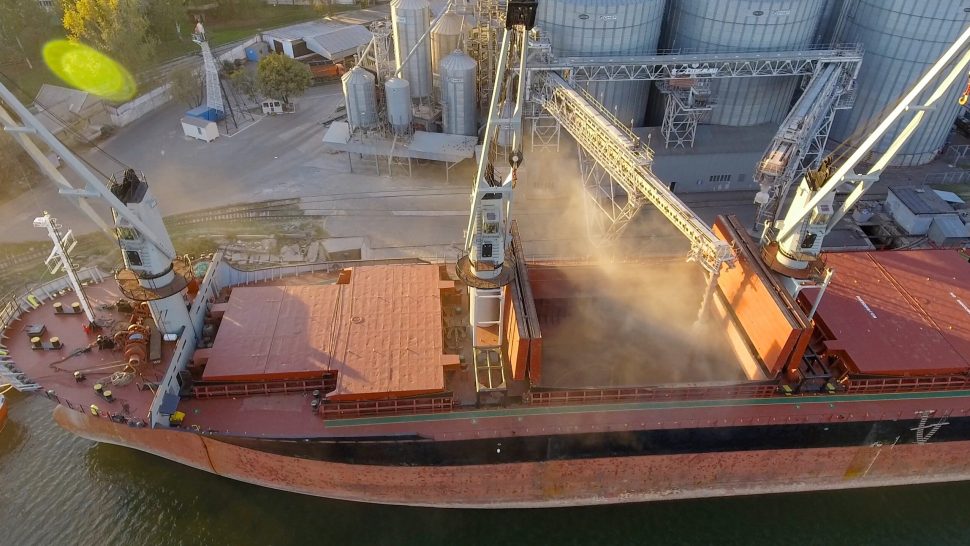
On August 14, an empty liquefied petroleum gas tanker called G. Arete paid $4.6 million for a single guaranteed passage through the Panama Canal's Neopanamax locks. Six months earlier, The Navigator noted on August 18, the median winning bid for the same privilege was about $55,000.
Bloomberg reported that day that the fee sat on top of a regular toll, which already runs into the hundreds of thousands of dollars. An eighty-four-fold rise between those two numbers is the story of how a public utility quietly handed its pricing power to whoever needs the shortcut most.
On one side of the isthmus sits the Panama Canal Authority, which publishes its toll schedule and moves it slowly and deliberately, like any regulator afraid of frightening its customers. On the other side sits the Authority's own auction system, a sealed-bid market for leftover booking slots with no price ceiling at all.
Earlier this year the Authority said average last-minute auction prices had climbed from roughly $135,000-140,000 before the Middle East conflict to around $385,000 in March and April, with individual bids passing $1 million, according to gCaptain’s August 21 report.
One arm of the same institution charges by the book. The other charges by desperation.
The Authority wants revenue and water in equal measure, because every lockage at Gatun Lake spends freshwater it cannot easily replace, and a strengthening El Niño threatens both. In April its administrator said officials expected normal operations through December, gCaptain reported at the time.
The carriers want certainty. A confirmed reservation is now the only way to guarantee a crossing date, and the Authority said so explicitly when it cut capacity, WorldCargo News reported on August 21.
The shippers who pay the auctions want speed above all, because for them a day saved is worth more than any published tariff.
Water and desperation
The immediate trigger came on August 21, when the Authority announced it will cut total daily transits from 38 to 34 on September 3 and to 32 by September 15, after below-expected rainfall through what should have been the wet season, ICIS reported that day. At the same time it restructured the auction itself, splitting bidders into four groups from LNG and LPG carriers to tankers, so that gas traders cannot simply buy every slot on offer, per the Canal Authority's customer notice of August 21.
That rule change is the Authority conceding, in writing, that the queue price had stopped rationing capacity and started concentrating it.

Underneath sits hydrology. The canal runs on Gatun Lake, and El Niño shifts rain away from the Panamanian watershed exactly when traffic is rising. Federal forecasters put an 81% chance in July that this El Niño reaches very strong status by October through December, and a 97% chance it persists into early spring 2027, per the NOAA Climate Prediction Center's July update.
Meanwhile demand is climbing. The Canal Authority's half-year traffic report shows the canal handled 6,288 transits in the first half of fiscal 2026, up 224 year over year, with cargo tonnage up about 5% to 254 million PC/UMS tons. More hulls chasing less water means the auction does the rationing that the toll table refuses to do.
Eighteen days of detour
In the 2023-24 drought the canal throttled transits and shipowners discovered for the first time that a state chokepoint could sell its way through scarcity. What differs now is demand. Then the pressure came from weather alone and global trade volumes were merely normal. Now the Strait of Hormuz has been closed to most commercial shipping since late February by the U.S.-Iran conflict, and energy cargoes that once crossed the Persian Gulf are finding their way to Panama instead, The Navigator reported on August 18. Two chokepoints failing at once is the part the 2023 playbook never priced.
The auction has a natural ceiling because the canal has a substitute. A liquefied gas cargo from the U.S. Gulf Coast to Asia takes about 26 days through Panama against roughly 44 around the Cape of Good Hope, The Navigator noted on August 18. Eighteen days of extra fuel, charter hire and cargo risk is what a bid buys, and if auction prices rose far beyond that value, rational owners would sail around Africa instead. The $4.6 million record suggests someone judged the wait longer than the detour, which is precisely the information a queue-price system is built to reveal.
Who pays
Carriers pass the slot cost into freight rates. The Navigator reported on August 18 that CMA CGM announced a $500 per container surcharge on U.S. East and Gulf Coast cargo starting September 10, up from $320 in July, and that the Shanghai-to-New York spot rate rose 10% to $8,706 per container as of mid-August. Importers pay it in landed costs. Consumers pay it at the shelf, invisibly. The Authority collects the tolls and the auction proceeds, which fund its drought infrastructure, so the institution profits from the very scarcity its customers suffer.
Draft restrictions spread the pain further than money can reach. Even where the cuts have been delayed, the planned drop of the maximum Neopanamax draft to 47.5 feet by October 1 forces every loaded ship to sail lighter or wait, WorldCargo News reported on August 21. Lighter ships mean more voyages for the same cargo, more fuel burned, more emissions per ton, all to move goods the lake can no longer carry efficiently. The physical constraint lands on grain exporters, chemical traders and gas suppliers long before it appears in any index.
If the read is right, auction prices stay elevated even after the four-group allocation spreads bids across sectors, because the underlying slot count keeps falling. The next signpost arrives September 3, when the reduced schedule takes effect and the first post-reform auction results print. The Authority's own warning that waiting times will grow for unbooked vessels is the mechanism stated plainly, as WorldCargo News put it on August 21.
Sustained heavy rainfall in the watershed lifting Gatun Lake, restored transit counts, and median auction prices collapsing back toward their six-month baseline within weeks rather than quarters would break the read. A Hormuz reopening would compound that, pulling rerouted energy traffic out of Panama entirely and deflating the premium in one stroke.
The cost settles on the farmers and manufacturers whose containers now carry a hidden tax set by strangers' sealed bids. A small tropical nation is learning that its greatest asset is not the canal itself but the freshwater that runs it, and today the real gate opens by auction.