Tanker bulls got their winter rates in August, paid for by war risk.
Freight got the bull case six weeks early, paid for in war-risk premiums that vanish the moment peace breaks out.
Singapore’s oil week opened on a comfortable forecast. Delegates at S&P Global’s APPEC conference heard that dirty tanker rates should pick up from October through the first quarter as demand recovers, Manifold Times reported in its APPEC coverage. The market declined to wait.
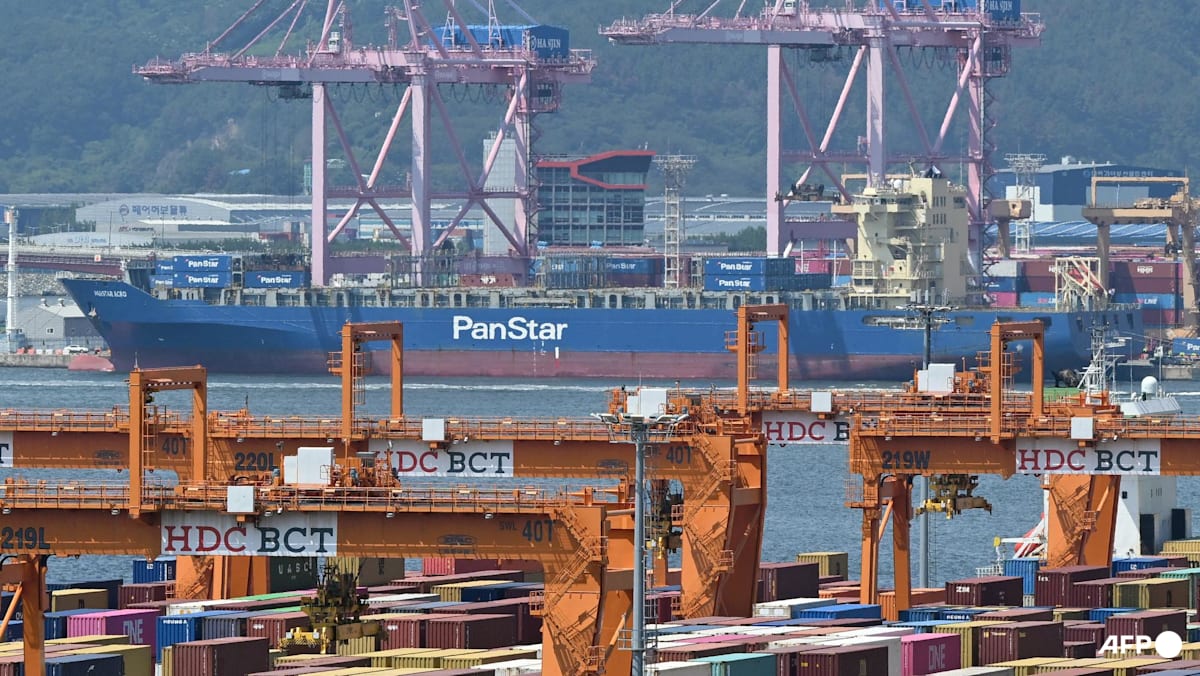
Within days of the conference season opening, very large crude carriers moving Gulf crude to China were quoted near half a million dollars a day. OilPrice.com carried Bloomberg data in August 2026 showing that one benchmark assessment touched $510,000 per day. That is not the orderly fourth-quarter firming the conference priced. It is a war premium arriving five months early, and it carries nothing for owners who cannot or will not sail through Hormuz.
The bullish call and the bearish call are both about the same ships. Argus-style fundamentals say winter demand, longer hauls and a thin orderbook lift rates through the fourth quarter. The physical market says something harsher: rates are already extreme because roughly a fifth of global seaborne oil has no clean exit. Kpler showed in its ledger on the failed Islamabad MoU, published August 19, that the sixty-day window lapsed on August 17 with no deal, no extension and no talks under way, leaving Tehran asserting a permit-and-toll regime over the strait and Washington rejecting it while keeping convoy escorts.
China’s refiners want secure barrels and are buying across every basin, pulling US Gulf, Brazil and West Africa cargoes east and tying up tonnage for forty-day voyages, Ship Universe reported on August 20.
Gulf producers like ADNOC are responding by owning the ships. Ship Universe also reported on August 20 that ADNOC L&S bought six VLCCs and five VLGCs for about $1.3 billion, treating tanker capacity as export security rather than freight to be rented.
The other side of fear
Independent Greek owners took it. TradeWinds reported on August 19 that an Angelicoussis-group VLCC earned a reported $25 million on a single fixture, and Seatrade Maritime noted in August 2026 that the first hulls willing to transit inbound through Hormuz fixed near $469,000 per day.
The trigger was the MoU's collapse and the resumption of attacks. The LNG carrier AL REKAYYAT and tanker WEDYAN were hit on days 20-21 of the window, three more ships followed within a week, and the southern Omani corridor that peaked at 48 crossings died by week four, Kpler reported on August 19.
Underneath sits the slow pressure of tonnage supply: AXS Marine reported in August 2026 that VLCC fleet utilisation had sagged to a year-low of 32 percent in mid-April before the crisis repriced it, colliding with a strait that never truly reopened.
Even during the truce, clearance ran at about 6.1 million barrels a day, roughly 40 percent of what Hormuz carried in 2025, and the unattributed share of cargoes hit 66 percent in the expiry week, Kpler noted on August 19.
The Iran-Iraq tanker war of the nineteen-eighties is the bounded model. Strikes on hulls did not stop oil; they repriced it. Lloyd’s List retrospective coverage of the tanker war records that war-risk premiums rose sharply through that conflict as underwriters absorbed repeated attacks on tankers in the Gulf, owners who sailed charged multiples of normal hire, and the flow shifted toward flags and insurers willing to take the risk. Rates stayed elevated for years because the threat persisted and no fleet expansion could outrun it. Risk, once priced into insurance, does not leave quickly.
May 2019 argues the other way. After the attacks on the Front Altair and Kokuka Courageous off Fujairah, freight spiked hard and then faded within weeks: the strait stayed open, underwriters absorbed the loss, and the premium bled out. If Washington and Tehran stumble back toward a framework, Commodity Board reported in August 2026 that Oman-mediated talks were reportedly live earlier this month, this market repeats 2019, not the tanker war, and half-million-dollar days evaporate before the first winter fixture loads. The difference between the two outcomes sits with mine-clearance crews and war-risk underwriters, not with Chinese demand.
Risk-willing owners print money while mainstream operators simply withdraw, shrinking the executable fleet below what any screen shows; Ship Universe stated on August 20 that fresh fixtures are clearing well above published assessments.
The workaround migrates the trade. Ship Universe reported on August 20 that ship-to-ship transfers outside the Gulf near Fujairah and Oman involved over 600,000 barrels a day of China-linked volumes in June and July, adding cost, delay and custody-transfer risk to every barrel.
The bill lands in the fourth quarter exactly where the conference expected good news. Kpler counts roughly 550 million barrels of missing clearance against normal Hormuz flows, bridged until now by inventories that thin from September, Kpler confirmed on August 19.
Who pays, who profits
Asian refiners pay, twice, once in freight folded into landed crude cost, once when restocking meets thinning buffers in October. Owners of modern VLCCs with insurance lines that still clear profit, along with the STS providers and surveyors working off Fujairah, and states like ADNOC that locked in ship capacity before the crowd. Iranian exports lose quietly: Kpler reported on August 19 that they collapsed from 893,000 barrels a day in July to 156,000 through August 17. Tehran is choking its own best customer's supply line and collecting tolls nobody has agreed to pay.
Ballast entries into the Gulf near their current two per day while Brent holds above $90, Kpler noted on August 19, would strengthen the tanker-war analogue, and winter rates would firm on scarcity alone: the bullish call arrives, but for reasons Singapore did not intend. If Omani-brokered talks restore even partial escorted transit and the dark-share of crossings falls from above 80 percent back under half, the 2019 pattern takes over and the premium unwinds faster than any orderbook could.
Either way, the strongest dirty-tanker market in years is distance, darkness and fear renting the same ships the bulls were counting on.