Iran's attacks on tankers make the shortest route to China the priciest
When peace fails on schedule, the ships willing to sail anyway stop being freight and become sovereignty.
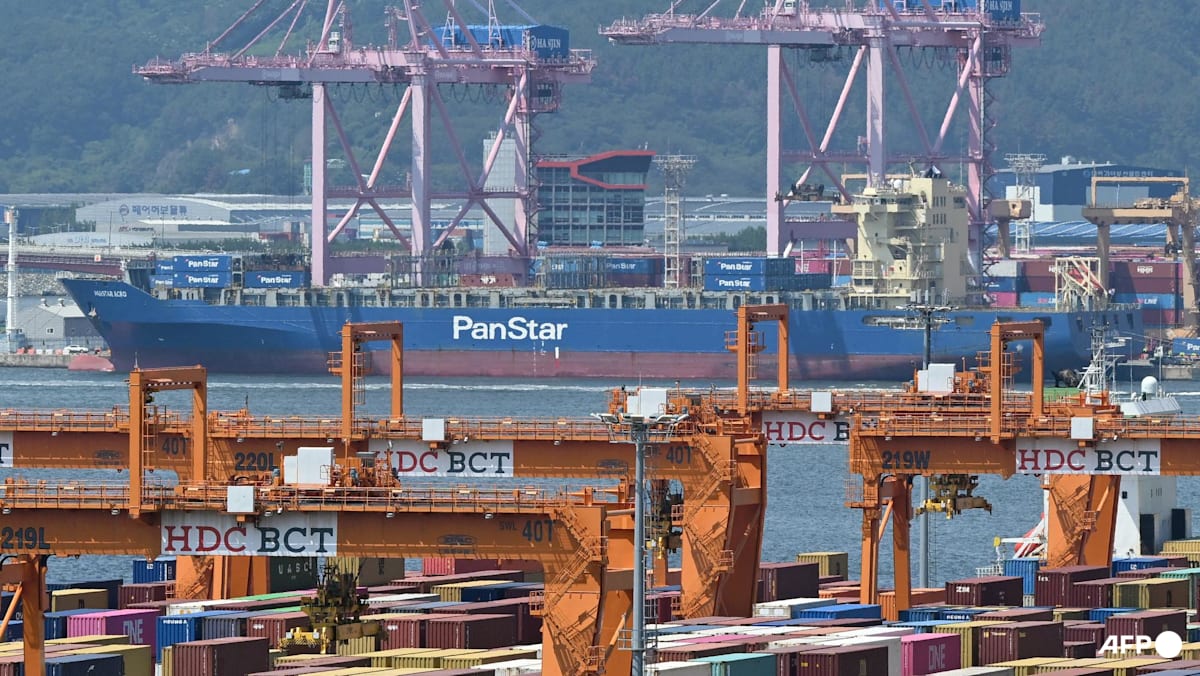
For most of modern oil trading, the shortest big crude haul on water ran from the Middle East Gulf to China, with the longer American Gulf route earning more per day and the shorter one undercutting it.
This month, the pricing table flipped twice. Lloyd’s List reported on August 14 that the Middle East benchmark collapsed abruptly during the brief truce, prompting brokers to call the drop brutal, while analysts observed it narrow the gap with Atlantic routes. But after the truce lapsed, Iran resumed attacks on shipping, and a Baltic Exchange weekly assessment cited by The Edge Malaysia on August 21 showed that the short Gulf route now pays a round-trip owner return near 585,000 dollars a day, versus about 170,100 dollars for the Atlantic haul to Asia.
A spread that used to live in the tens of thousands now stands in the hundreds of thousands, and it reversed sign inside one season.
The trigger was the lapse of the Islamabad Memorandum of Understanding. Its 60-day window ended at midnight on August 17 with no deal or extension and no talks underway; Tehran immediately announced a permit-and-toll regime over the Strait of Hormuz, which Washington rejected, Kpler reported on August 19.
Within days, Bloomberg via gCaptain noted on August 21, assessed earnings for the Middle East run east surged to nearly 510,000 dollars a day, the highest since late June, when Iran previously resumed attacks in the strait.
The truce never fully reopened the flow. Kpler’s August 19 reporting said Gulf crude exports stood at about 6.1 million barrels a day under the deal, compared to the roughly 15 million barrels Hormuz typically carried in a normal 2025.
The fleet prepared to transit has dwindled. According to Kpler on August 19, ballast entries fell to about two ships a day, and by the last week of the truce, two-thirds of barrels leaving the Gulf could no longer be traced to their terminal of origin, down from 95 percent three weeks earlier.
Tankers are increasingly running through the strait with transponders switched off to evade Iranian attack, increasing the risk of collision in the world’s busiest oil lane. The New York Times (NYT) reported on August 21 that more than eighty percent of recent tanker and gas carrier crossings went dark or took unclassified routes instead of using Iranian or Omani corridors. Al Jazeera, on August 20, corroborated this pattern.
The market is no longer pricing distance; it is pricing willingness.
Producers are buying ships
South Korea’s Sinokor, with a fleet experienced in dangerous crossings, chartered the Mongolia Prosperity to ship Persian Gulf crude to East Asia for 31 million dollars per voyage, or 570 Worldscale points, with the Chinese refinery charterer paying a war-risk premium in the high single-digit percentages of hull value, Bloomberg reported via gCaptain on August 22.
On August 21, Bloomberg observed Saudi Aramco’s shipping arm offering prompt cargoes from inside the Gulf, while Iraq has borrowed Emirati capacity to export its barrels. According to Ship Universe on August 20, ADNOC’s logistics subsidiary paid about 1.3 billion dollars for six very large crude carriers and five gas carriers, converting tanker tonnage into strategic inventory for the emirate’s exports. Producers are buying ships the way states once bought airfields.
The Chinese side pays
Ship Universe said on August 20 that both teapot refiners and state buyers seeking secure liftings have pushed fixtures above published assessments in both Suez directions, with Middle East earnings above half a million dollars a day and U.S. Gulf routes to China around 260,000 dollars.
When owners refuse the strait altogether, cargo moves laterally. Ship Universe’s August 20 reporting put ship-to-ship transfers off Fujairah and Oman involving China-linked vessels above 600,000 barrels a day during June and July.
Each barrel lightened outside the Gulf requires an extra ship day, a surveyor, and a custody check, with all costs landing in the final price for a Shandong refinery that was already paying Brent above 90 dollars as of August 19, per Kpler.
The Iran-Iraq tanker war
The 1980s tanker war showed the same divide between a small set of owners willing to sail and a majority who were not, with the United States reflagging Kuwaiti tankers under the American merchant marine to maintain flows. Then, one superpower provided a navy to shield ships from attack. Today, neither Washington nor Tehran seeks a full strait closure, but both assert authority, so no capital’s flag dispenses protection; every transit becomes a private negotiation with risk.
The counter-case recommends restraint: after the 2019 attacks on Front Altair and Kokuka Courageous, freight rates spiked before reverting within a quarter as insurers repriced and owners returned. That cycle depended on attackers seeking deniability, while today’s regime operates through declared permits and published tolls.
Owners profit, charterers pay
First, owners profit. A Baltic Exchange benchmark very large crude carrier earns nearly 585,000 dollars a day roundtrip from the Middle East Gulf, while the safer zone outside the Strait still pays over 197,800 dollars according to The Edge Malaysia’s August 21 summary of Baltic data.
Second, charterers pay. Iraq uses Emirati ships, Chinese refiners cover war-risk surcharges, and Kpler’s August 19 count pegged a gap of about 550 million barrels below normal Hormuz flows, landing as thinner inventories in the fourth quarter.
Third, the market fragments. With two-thirds of cargoes untraceable to their terminal, screen prices diverge from the actual deals, and the benchmark ceases to measure the trade it was meant to describe, Kpler reported on August 19 and Ship Universe on August 20.
If this read holds, the premium for the Gulf route over Atlantic ones will persist through September as ballast entries stay near two per day and Fujairah transfers rise. All three trends point to a scarcity of willing ships, not Chinese demand, as the real price driver.
This could reverse if Washington and Tehran revive talks backed by convoy or insurance: a rebound in transponder traffic would collapse war-risk premia within days, as happened when floating storage fell from 61 million barrels to 16 in three weeks during the truce, Kpler calculated on August 19. This same fleet can halve the spread as fast as it doubled it, without any treaty.
Two hundred-plus days of war have turned the world’s cheapest oil route into its costliest, and the premium now accrues to those who brave the strait. Sinokor and a handful of owners now set the marginal crude price to China, charging Beijing for courage by the day.
States have discovered they cannot move their own oil, while shipowners have learned to price like sovereigns. Until a navy claims Hormuz, courage is the scarcest barrel, and it prices daily.