War-risk premiums soar as tankers keep moving through Strait of Hormuz
Tanker owners, exporters and underwriters face costly decisions as insurers price passage through the Strait of Hormuz like a war zone.
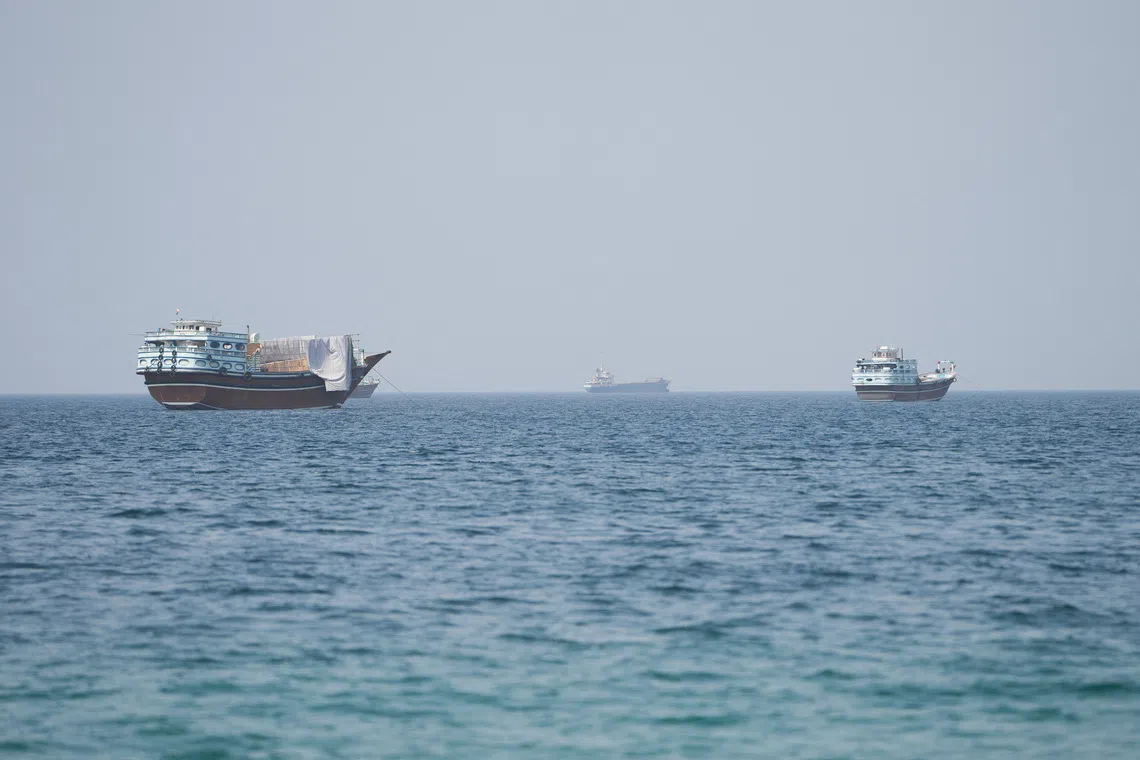
A hundred-million-dollar tanker can still steam through the Strait of Hormuz, and this week that transit costs three to ten million dollars in war-risk insurance.
Before the war began in February, cover for the same voyage ran at roughly a quarter of one percent of a vessel's value; brokers now quote three to ten percent, The National reported on July 17.
The hulls keep moving, laden with crude, diesel and liquefied gas. But the ledger has already priced the strait as a war zone, and every owner, exporter and underwriter on the water is now choosing sides inside a chokepoint both Washington and Tehran claim to keep open.
The trigger for this week's repricing was kinetic. On August 8, the United Arab Emirates said Iran struck a tanker owned by the Abu Dhabi National Oil Company with a missile as it tried to pass through the strait. According to Al Jazeera on August 20, ADNOC stated fifteen of its vessels have been attacked by missiles and drones since the war started, killing one crew member and injuring twenty.
Within days, ship-tracking showed traffic nearly stopped. Reuters via Al-Monitor reported on August 16 that five commodity vessels crossed on Saturday August 15 and none registered on Sunday, against thirty-one the weekend before. Each attack lands, and within roughly a day the trade press carries fresh quotes from brokers and underwriters moving together: the market reprices faster than any navy can reposition.
Underneath the daily moves sits the slow pressure. A war between the United States, Israel and Iran has run since February, alongside a US naval blockade of Iran-linked shipping that Washington says it can maintain indefinitely and an Iranian demand, voiced by Foreign Minister Abbas Araqchi, that Washington meet its conditions before normal passage resumes: Reuters carried this exchange via Al-Monitor on August 16. Iran insists ships use its northern route hugging Larak and Qeshm.
Washington escorts tonnage along Oman's southern coast and has even threatened to bomb Oman, a US ally, to stop Muscat cutting a joint-management deal with Tehran, Al Jazeera reported on August 20. Every owner must now pick a sponsor, or pretend to have none.
The pretending shows up in the tracking data. Al Jazeera reported on August 20 that the maritime intelligence firm Kpler counted 112 crude, LPG and LNG carriers through the strait between August 1 and August 19; twenty-one openly used the Iranian route, two formally used the Omani route, and eighty-nine, more than eighty percent, went dark or unclassified, their transponders off or their paths unreadable.
Reuters via Al-Monitor reported on August 16 that across all cargo types, 236 ships transited in that span and 148 of them, better than six in ten, could not be cleanly tracked. Before the war, more than a hundred and thirty ships a day crossed openly.
The New York Times (NYT) noted on August 21 that a fifth of the world's crude and LNG now moves partly invisible, which raises collision risk in a crowded channel and makes spills likelier and slower to answer.
Iran wants tollbooth power without firing another shot, meaning recognition that passage runs through its waters on its terms. Washington wants the strait declared open while blockading anyone Tehran-linked, so the pressure stays on Iran's economy rather than on world oil. Gulf exporters, ADNOC, Saudi Aramco, QatarEnergy, want their cargoes moving without becoming targets, and their tonnage increasingly sails silent.
The underwriters at Lloyd's want either a premium high enough to make the danger worth carrying, or quotes priced deliberately to refuse the business. Ship Universe reported on July 29 indicative quotes of ten to fourteen million dollars to insure a single voyage for a five-year-old VLCC valued around a hundred thirty-eight million dollars, noting the highest figures look like go-away pricing aimed at US-linked charterers. The premium sheet shows what each side really believes.
The Tanker War
The historical bound is the Tanker War of 1984 to 1988, when Iraq and Iran attacked each other's shipping and Lloyd's created a standing war-risk committee whose premiums rose and fell with each strike, peaking before American escorts reflagged Kuwaiti tankers and broke the siege. Then, as now, insurance was the real gate: a hull that could not be covered did not sail, whatever the navies promised. What differs is scale and silence.
In the eighties, the attackers published claims and the market could see who hit what; today, according to Al Jazeera on August 20, more than four-fifths of energy transits sail dark, so underwriters cannot tell which voyages carry the risk they are pricing, and uncertainty costs more than damage.
The International Union of Marine Insurers answered the IMO secretary-general, Arsenio Dominguez, when he complained that premiums were not falling fast enough, saying marine insurance is part of the solution and that the problems are kinetic, navigational and legal, not financial. The National carried the exchange on July 17. IUMI has a point: cover has been provided throughout, and a market that kept writing policies through seven months of war is simply surviving. If premiums fell to prewar levels tomorrow while missiles still flew, the market would collapse when the next hull burned, taking all cover with it. High prices may be the only honest signal left in the strait.
Who pays
Exporters pay first, in freight and cover folded into every barrel: the cost lands on refiners in Asia who buy Gulf crude and cannot reroute a pipeline through a mountain range. Owners pay in charter-party disputes over who absorbs the premium, with Ship Universe flagging premium allocation, deviation and demurrage fights as the emerging legal battleground in the same July 29 report. Seafarers pay most literally. Around six thousand are trapped aboard vessels in the region, with the International Maritime Organization working evacuation routes, The National reported on July 17.
Who profits? Neutral-tonnage owners sailing older ships on non-US charters, tanker rates tripled to over two hundred thousand dollars a day at the peak, and the underwriters themselves, collecting crisis-level premiums on capacity that mostly never burns, LinkedIn industry summary noted in August 2026 and The National reported on July 17.
China profits quietly. An Al-Monitor newsletter reported in August 2026 that it has cut deals with the Houthis and adjusted to a long American war, positioning itself as the buyer Tehran can still sell to while Western-linked tonnage gets go-away quotes. When insurance prices political alignment rather than physical risk, the discount goes to whoever stands outside the American system: a coming split in oil trade drawn in broker quotes.
If the read is right, the next US-Iran memorandum or even a rumor of one will pull quotes down within a day or two, exactly as Marsh's Marcus Baker described the roller coaster around the earlier sixty-day MoU that collapsed in an account The National published on July 17. Traffic counts will recover toward the old hundred-plus-a-day baseline only after premiums do, premiums move first, AIS follows. If instead quotes stay pinned near the top of the band while attacks pause, the market has decided the war is permanent, and exporters will start pricing Gulf barrels for a world where the strait works but only barely.
The chokepoint is no longer twenty-one miles of water between Iran and Oman, it is the quote a broker sends at midnight after the latest missile.
Whoever controls the price of crossing controls the strait, and right now that is not a president in Washington or a minister in Tehran, but a handful of underwriters deciding, one policy at a time, how much of the world's oil is worth carrying.